
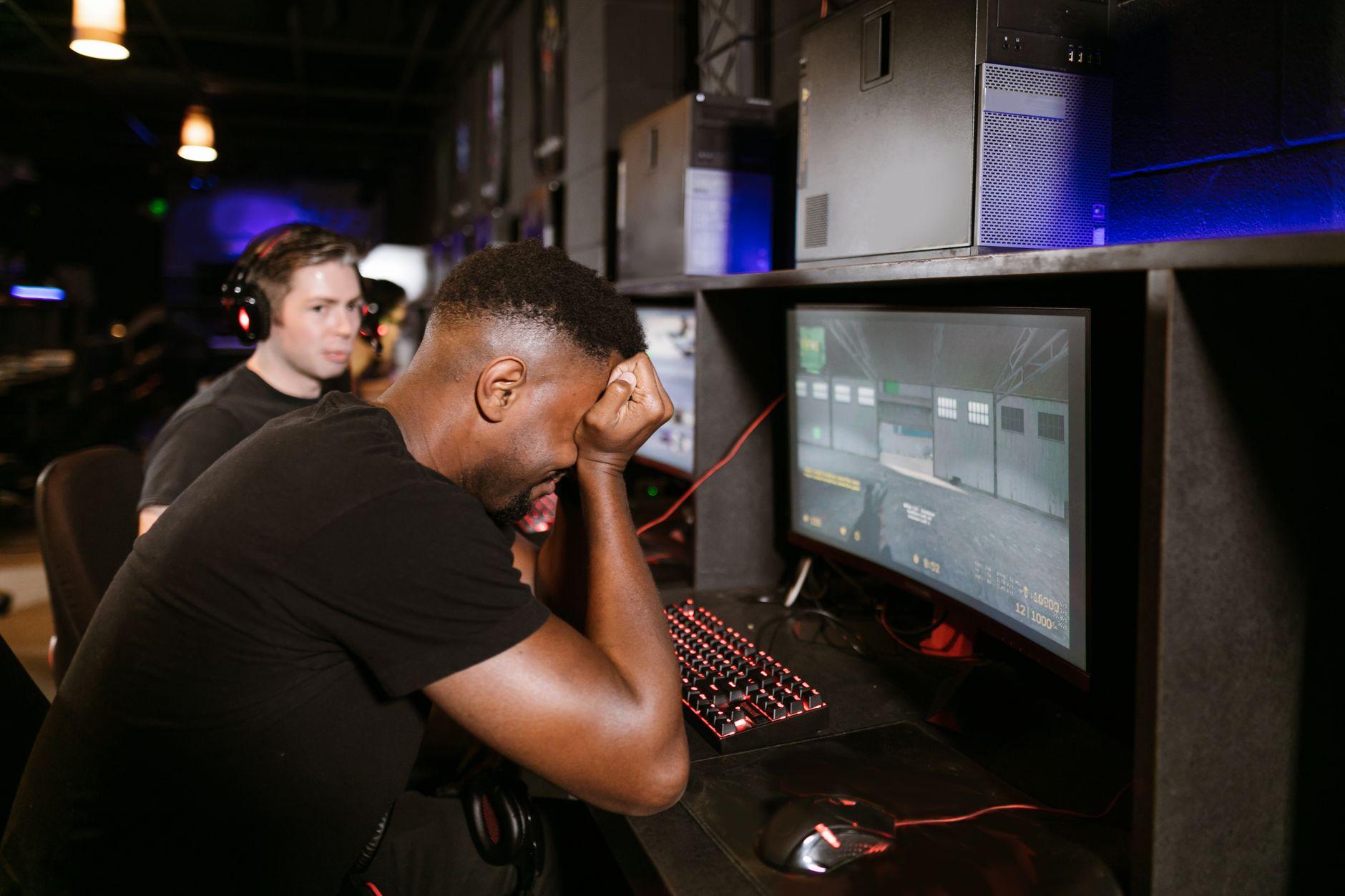

When Your Connection Decides to Take a Nap Mid-Clutch
You know that feeling? It’s like you’re playing a ranked match and everything’s going smooth, you’re about to land that game-winning shot, and then… poof. Your character just… stops. It’s not lag, not exactly. It’s worse. It’s like the network packet carrying your command to move left or shoot decided to take a detour through a black hole. Your input arrived, but it arrived late, or maybe it didn’t arrive at all. Suddenly, you’re staring at the killcam, wondering how the enemy player suddenly materialized behind you when, in your reality, you were already behind cover. That’s network packet loss for you, a silent killer of your ranked match dreams.
This isn’t just about a bit of stuttering. We’re talking about genuine disconnects, where your game client thinks it’s still connected, but the server has no clue you’re even there anymore. Imagine you’re in a tense 1v1, you perfectly time your dodge, only to find your character just stood there, eating the bullet. It’s infuriating, and it’s precisely what packet loss feels like when it’s bad. You’re sending information, your internet connection is supposed to be humming along, but those crucial packets of data get dropped somewhere along the way. It’s a crapshoot whether your actions register, and that’s a terrible feeling when you’re trying to climb the ranks.
My connection once dropped during a crucial final round of Valorant. I swear, I had the clutch. I could see the enemy peeking, I lined up the headshot, and then… nothing. My game froze for about five seconds, and when it un-froze, I was dead. My teammates were spamming “What happened?” in chat. I just typed back, “Packet loss happened.” It’s moments like these that make you want to throw your keyboard out the window. You’re not just losing a match; you’re losing progress, you’re losing points, and you’re losing your mind over something that’s often out of your direct control.
The real kicker is how inconsistent it can be. One minute your ping is stable, your connection is solid, and you’re dominating. The next, you’re experiencing what feels like teleporting enemies and shots that go through people. This unpredictability is the most frustrating part. You might try to troubleshoot, check your router, restart your modem, or even upgrade your internet plan, but sometimes, the issue lies with your Internet Service Provider (ISP) or even further up the chain. It’s like trying to fix a leak in a pipe when the actual break is miles away, under the city. According to Investopedia, packet loss occurs when one or more packets of data traveling from source to destination are lost in transit.
It’s not just about gaming, either. Ever try to have a video call and the other person’s face just freezes for ten or fifteen seconds, then suddenly they’re somewhere else? That’s packet loss disrupting your conversation. Or attempting to download a large file, only for the download speed to plummet because packets aren’t arriving at the expected rate? It impacts everything that relies on a steady flow of digital information. The financial sector, for instance, relies heavily on low-latency, reliable connections, where even minor packet loss can result in significant losses; companies invest millions in robust network infrastructure to combat this, as discussed in articles on Forbes.
Honestly, sometimes I think these ISPs just don’t care. They sell you a package with a certain advertised speed, but they don’t really guarantee the quality of the connection. You pay for, say, 100 Mbps, but if half of those megabits are getting dropped, what’s the point? You’re essentially paying for a service that’s fundamentally broken, and the customer support often offers canned responses that don’t actually fix the root cause. It’s a system designed to make you feel helpless.
Unfortunately, sometimes the most effective solution is simply to change your ISP, assuming you have other options in your area. If you’re stuck, however, you can try some network tuning. Lowering your MTU (Maximum Transmission Unit) size can sometimes help reduce fragmentation and thus packet loss, though finding the optimal setting can be a trial-and-error process. You can also try using a VPN that offers optimized routing, though this can sometimes introduce its own latency issues. The U.S. government’s National Institute of Standards and Technology (NIST) provides extensive research on network performance and reliability, highlighting the complex nature of data transmission challenges (NIST).
You’ll see a lot of advice online about Quality of Service (QoS) settings on your router. The idea is to prioritize gaming traffic over other internet activities. While this can help in some scenarios, it’s not a magic bullet. If your core internet connection is unstable, QoS won’t stop packets from getting lost before they even reach your router. It’s like trying to direct traffic more efficiently on a road that’s constantly collapsing.
Ultimately, network packet loss is a frustrating reality of online connectivity. It’s a ghost in the machine that can turn a winning match into a replay of your own failure, and you’ll often find yourself blaming yourself for things you literally couldn’t prevent. Maybe the only real way to win is to play offline games.