
Beyond the Click-Clack: Unlocking the Soul of Your Keyboard
You know, I used to think all keyboard switches were pretty much the same. You press a key, it registers. Simple, right? Then I stumbled into the rabbit hole of custom mechanical keyboard switches, and let me tell you, it’s like discovering a whole new universe of tactile sensations and auditory bliss. It’s not just about typing anymore; it’s about a personalized experience, a symphony of clicks and thocks tailored precisely to your fingertips. This obsession can start with something as simple as wanting a quieter keyboard for late-night coding sessions, or it could be chasing that perfect, buttery-smooth press that makes typing feel like gliding.
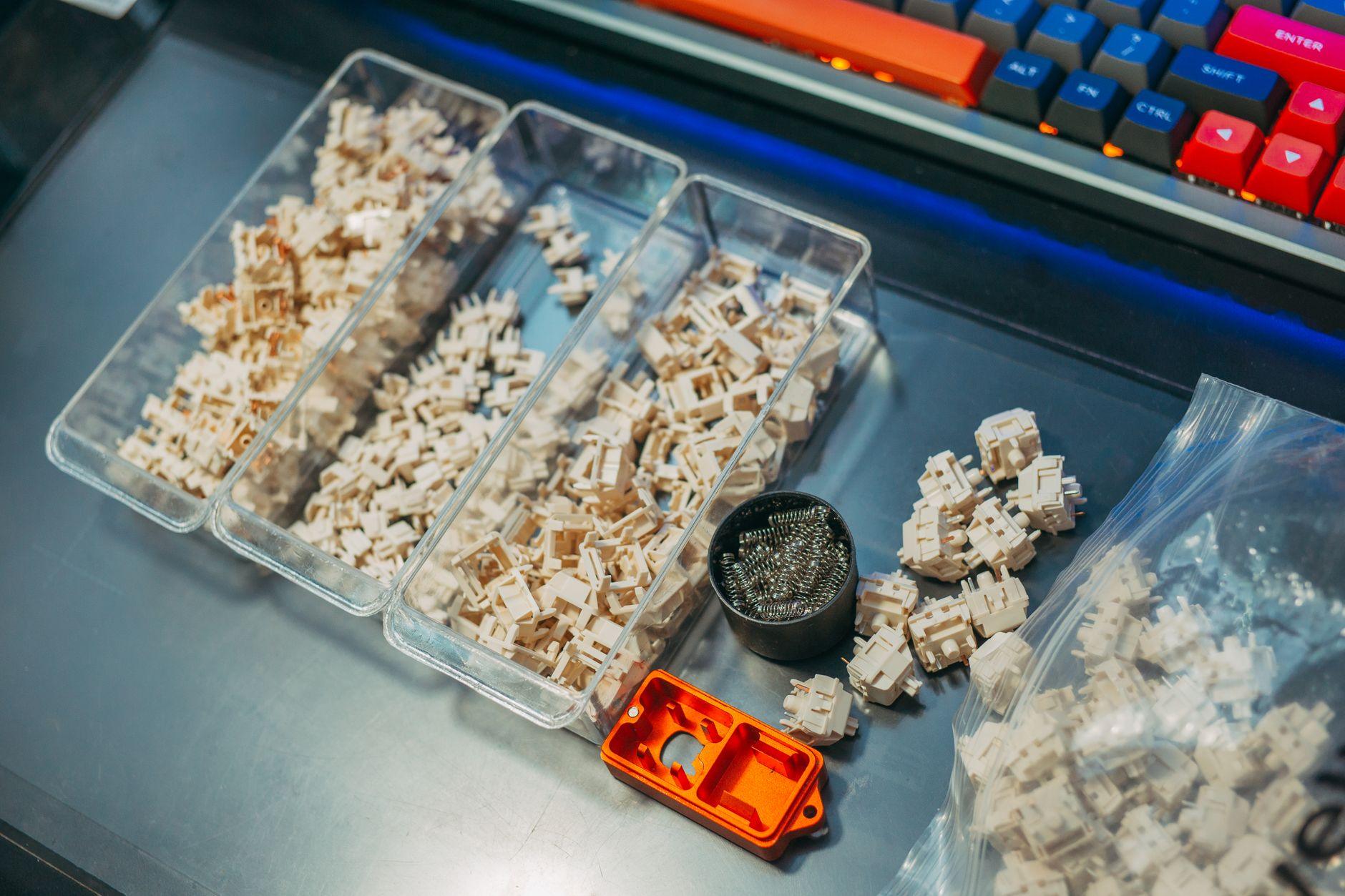
Seriously, the sheer variety is mind-boggling. We’re talking about linear switches, where the key travels straight down without any bump or click. Think of something like the Gateron Yellows or Cherry MX Reds – they’re super smooth and great for gaming because you can bottom out really fast. Then you’ve got tactile switches, which give you a little nudge or “bump” when the key is activated. These are my go-to for writing, like the Bobas U4T with their satisfying tactile feedback that just lets you know you hit the key. And if you’re feeling really bold, there are clicky switches, like the iconic Cherry MX Blues, that give you both a tactile bump and an audible “click” sound. It’s a whole spectrum of feel and sound, and finding your perfect switch can feel like a quest.
I remember spending what felt like hundreds of dollars on just a few sets of switches when I first started. It’s easy to get carried away, especially when you see all the fancy lubing videos and read about switch films. The idea is that by applying a tiny amount of specialized lubricant to the moving parts of the switch, you can smooth out the travel and reduce scratchiness. It sounds simple enough, but it’s incredibly tedious work, especially when you’re dealing with 70-100 switches for a full-size keyboard. My hands were cramping for days, and honestly, the first time I tried it, I think I made it worse. The learning curve is steeper than you’d expect.
The real downside, though, is the cost. A good set of custom mechanical keyboard switches can set you back anywhere from $30 to $100 or even more, and that’s before you buy a keyboard to put them in. If you’re on a tight budget, this hobby can be pretty brutal. You might be looking at a total setup cost of $200-$500 easily, which is way more than your average Logitech keyboard. It’s definitely a luxury, and you have to really love the typing experience to justify the expense. For some, it’s just not worth chasing that perfect feel when a standard membrane keyboard works perfectly fine for their daily needs, a sentiment I can absolutely understand sometimes.
But oh, when you find “the one,” it’s pure magic. I recently got my hands on some Kailh Box Jades, and the click they produce is just… chef’s kiss. It’s so sharp and distinct, not mushy or hollow like some other clicky switches. It’s the kind of sound that makes you want to type just for the sake of hearing it. It’s a small joy, but these little things make a huge difference in your daily interaction with your computer. You can find resources comparing different switch types on sites like Keyboard University to get a better idea of what you might like.
The community around custom mechanical keyboards is also a massive part of the appeal. You’ll find enthusiasts on forums like r/MechanicalKeyboards on Reddit, sharing their builds, talking about switch types, and even designing their own switches. It’s a niche, for sure, but a passionate one. You’ll see incredible keyboards that cost thousands of dollars, intricate artisan keycaps that look like tiny pieces of art, and endless discussions about the subtle nuances between a Gateron Ink Black and a NovelKeys Creams. It’s a deep dive into a hobby that most people never even knew existed.
Frankly, I’m still surprised that so many people are willing to spend $50-$150 on a set of keycaps alone. It’s a lot of money for something that’s essentially plastic. But then again, these aren’t just any plastic keycaps; they’re often made from durable materials like PBT plastic, which resists shine and wear much better than the cheaper ABS plastic found on most keyboards. They come in a dizzying array of colors, profiles, and designs, from minimalist monochrome sets to elaborate themed sets inspired by anime or popular culture. Companies like GMK are known for their high-quality, durable keycap sets, but they often command premium prices and have long wait times, sometimes months.
Ultimately, the obsession with custom mechanical keyboard switches boils down to a desire for a truly personal computing experience. It’s about control, about tailoring every single aspect of your interaction with your machine. It’s not just about typing; it’s about the sensory feedback, the aesthetics, and the sheer satisfaction of building something uniquely yours. Whether you’re a programmer spending hours at your desk, a gamer needing that split-second response, or just someone who appreciates a well-crafted tool, there’s a perfect switch out there waiting for you. Or, you know, you could just stick with the keyboard that came with your computer and save yourself a small fortune.