
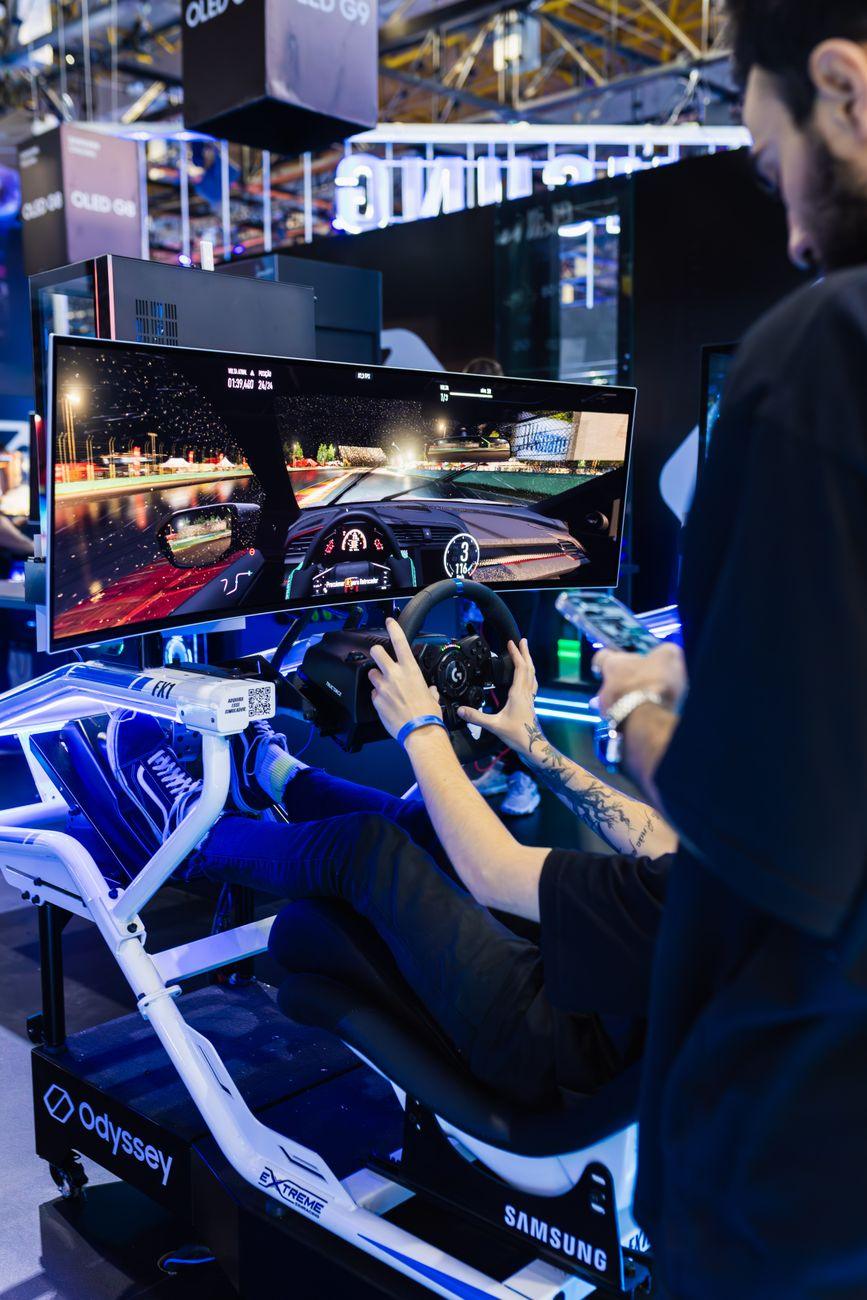

Your Eyes Will Thank You: Why Gaming on an Ultrawide Feels Like a Whole New Dimension
I remember unboxing my first ultrawide monitor. I’d heard the hype, seen the pictures, but actually seeing that expansive 21:9 aspect ratio in person was something else. It felt like the edges of my desk just disappeared. Suddenly, the game world wasn’t just in front of me; it surrounded me. For games that support it, it’s a total immersion boost you can’t get with standard 16:9 displays. Playing something like Cyberpunk 2077 or Assassin’s Creed Valhalla on an ultrawide pulls you right into Night City or the Norse wilderness. The extra horizontal real estate means you see more of the environment, more of the action, without having to turn your head or rely solely on your mini-map. It’s like going from a normal window to a panoramic view.
Seriously, the added field of view is no joke. In competitive games, this can be a genuine advantage. Imagine spotting an enemy flanking you from the corner of your screen that you’d totally miss on a regular monitor. Think Battlefield 2042 maps, or even Valorant rounds. You get a broader perspective, which translates to quicker reactions and a better understanding of what’s happening around you. It’s not just about seeing more; it’s about seeing sooner. This feels like a legitimately unfair advantage sometimes, and I’m not even a pro gamer.
Of course, it’s not all sunshine and roses. The biggest hurdle? Cost. Ultrawide monitors are still generally more expensive than their 16:9 counterparts, often costing a few hundred dollars more. You’re paying a premium for that extra screen real estate. For example, a good 34-inch ultrawide might set you back $400 to $700, while a similarly specced 27-inch 16:9 monitor could be found for $200 to $400. That’s a significant price jump, especially if you’re on a tight budget.
Then there’s the support issue. While many modern games are fantastic with ultrawide resolutions, you’ll still run into titles, especially older ones or indie games, that either don’t support it at all or force you to play with obnoxious black bars on the sides. It’s incredibly frustrating when you’ve invested in this premium hardware and a game you’re excited about looks like it’s being played on a postage stamp. I’ve encountered this with some older RTS games, and it’s a real buzzkill. You’ll often find workarounds like Flawless Widescreen or custom game patches on forums like Reddit, but that’s more tinkering than most people want to do just to play a game properly.
The sheer size of these monitors can also be a double-edged sword. A 34-inch ultrawide, which is a popular size, has a similar height to a 27-inch 16:9 monitor but is much wider. This means you might need to adjust your desk setup to accommodate it. Some people find they have to sit further back, or the monitor takes up a huge chunk of their desk space. It’s a commitment. For me, the immersion is worth it, but I’ve seen friends struggle to find the perfect ergonomic position.
Despite the drawbacks, I’m a complete convert. The way ultrawide monitors enhance depth perception and immersion is unmatched. You feel more connected to the game world. It’s like experiencing a movie on a massive cinema screen versus a television. The benefits for productivity, like having multiple windows open side-by-side for work or research, are also substantial, as highlighted by sites like Forbes when discussing their overall utility. Plus, for tasks like video editing or graphic design, the extra horizontal space is invaluable, similar to how professionals use high-resolution displays for detailed work, a point often made by Investopedia.
Ultimately, if you’re serious about gaming and looking for that extra level of immersion, an ultrawide monitor is a fantastic upgrade. Just be prepared for the price tag and the occasional compatibility headache. Still, given the choice, I’d never go back to playing games on anything less than an ultrawide. The future of gaming displays is wide, and frankly, if you’re still squinting at a small screen, you’re probably missing out on what gaming is supposed to feel like.