
From Joysticks to Haptic Havens: The Wild Ride of Game Controllers
Man, I still remember my first Atari 2600 joystick. It was this chunky, red thing with a single button. You’d jam it around, trying to make your little pixelated guy jump or shoot. It felt so basic, but back then, it was cutting-edge! Honestly, it’s kind of mind-boggling to think how far we’ve come from those simple sticks to the complex, ergonomic marvels we hold today.
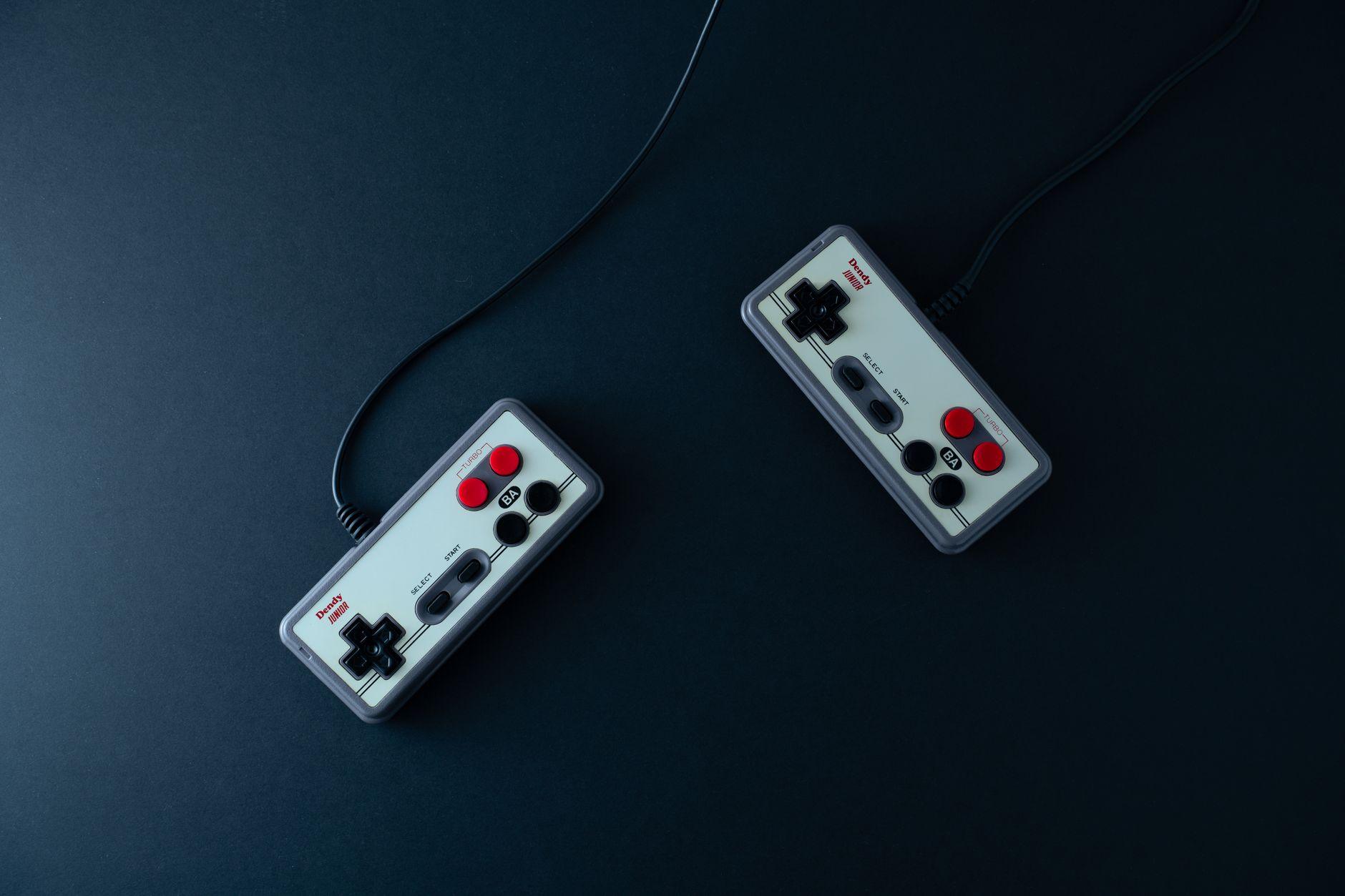
The NES controller was a big step up, introducing the D-pad. Suddenly, you had eight directions of precise movement, which made games like Super Mario Bros. possible. And then came the Super Nintendo with its four face buttons, changing how we interacted with games forever. These weren’t just incremental changes; they were fundamental shifts in how we played. I mean, trying to play a modern platformer with just an Atari joystick would be a nightmare.
You can’t talk about controller evolution without mentioning the PlayStation DualShock. Introducing analog sticks and rumble feedback back in the late ’90s was a huge deal. It gave players a new level of immersion and control. Suddenly, you could fine-tune your character’s movement or feel the impact of an explosion right in your hands. It’s funny, though, how many of us have probably accidentally mashed the wrong shoulder button during a crucial moment, right? That dual-stick layout, while revolutionary, definitely has its quirks depending on the game.
The Nintendo 64 controller was a bit of an odd duck, with its three prongs and the now-famous analog stick. It was innovative, for sure, offering 360-degree movement that felt amazing in games like Super Mario 64. But holding that thing for hours? My hand would get pretty cramped. It’s a prime example of how sometimes, function doesn’t perfectly align with comfort, even when trying to push boundaries. Still, the analog stick on that thing was a precursor to pretty much every modern controller’s most important feature.
Then came the era of the Xbox controller and its dominant position in the PC gaming world. Its ergonomic design, while maybe not everyone’s cup of tea initially, proved incredibly popular. The placement of the analog sticks, the trigger buttons, and the overall feel just worked for a massive audience. They really refined the layout that many still consider the gold standard for third-person action games. It’s why you see so many PC games defaulting to Xbox button prompts.
The push towards wireless technology was another massive leap. No more tangled cords getting in the way or accidentally pulling your console off the shelf. Brands like Logitech were early pioneers in the wireless controller space, paving the way for the seamless experiences we have now with PlayStation DualSense and Xbox Wireless Controllers. Honestly, the freedom of wireless gaming is something I don’t think I could ever go back from.
And the haptic feedback and adaptive triggers on the PlayStation 5’s DualSense controller are pretty mind-blowing. Feeling the tension of a bowstring or the distinct texture of different surfaces under your fingertips adds a whole new dimension to gaming. It’s not just a vibration; it’s a nuanced sensation that truly enhances immersion. Of course, not every game fully utilizes these features, which can be a bit of a letdown. You pay for this incredible tech, and then sometimes it feels like it’s just sitting there, unused. It’s still a bit of a lottery as to which games will really make it shine.
The controller landscape is still shifting, with mobile gaming introducing touch controls and innovative accessories. We’ve seen controllers that fold, attach to phones, and even ones that aim to replicate the precision of a mouse and keyboard for certain genres. It’s a constant battle between convenience, immersion, and pure functionality. The real question is, will we ever get controllers that truly eliminate the need for separate gaming peripherals altogether, or are we destined to keep adapting to new input methods forever?